New Zealand
The ACPCC has been closely involved with two New-Zealand based studies, both of which informed changes to the New Zealand National Cervical Screening Programme.
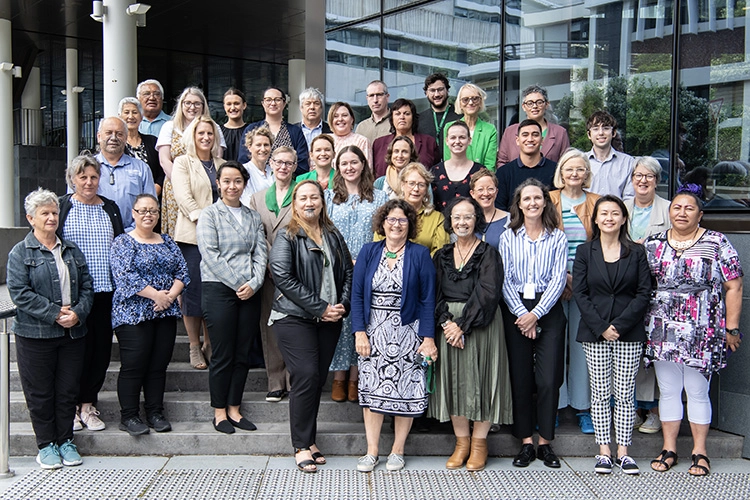
Te Ara Waiora Study
Te Tātai Hauora o Hine, National Centre for Women’s Health Research Aotearoa, and Mahitahi Hauora Primary Health Entity undertook a trial implementing HPV self-testing in Te Tai Tokerau (Northland). The trial aimed to test whether cervical screening coverage utilising the universal offer of HPV self-test program approach was non-inferior to cervical screening coverage in the then cytology cervical screening program.
Data collection for this study is complete and to date there have been three publications:
Lawton B, Gibson M, Slater T, Parag V, Stevenson K, Adcock A, et al. Primary cervical screening using a universal offer of human papillomavirus self-testing versus usual care in Aotearoa New Zealand: a cluster-randomised, non-inferiority trial. The Lancet Obstetrics, Gynaecology, & Women’s Health. 2026
Gibson-Helm M, Slater T, MacDonald EJ, Stevenson K, Adcock A, Geller S, et al. Te Ara Waiora-Implementing human papillomavirus (HPV) primary testing to prevent cervical cancer in Aotearoa New Zealand: A protocol for a non-inferiority trial. PLoS One. 2023;18(3):e0280643.
Slater T, Stevenson K, Adcock A, Clueard MA, Aperahama K, Thompson C, et al. Opportunities to flip the narrative from burden to action for young women joining the National Cervical Screening Programme in Aotearoa New Zealand: a Kaupapa Māori qualitative exploration of experiences and knowledge of cervical screening for 18-30 year olds. J Prim Health Care. 2025
Further publications are anticipated in 2026. The study played a critical part in informing the transition of New Zealand’s NCSP from cytology-based screening to HPV-based screening, including the option of self-test.
He Tapu Te Whare Tangata: Empowering Rural Solutions Study
The He tapu Whare Tangata study explored a new clinical pathway for colposcopy using HPV self-taken vaginal swabs, point-of-care testing, and direct referral to secondary services. The research centre Te Tātai Hauora O Hine partnered with the Iwi (tribal) group Ngāti Pāhauwera Development Trust, and Māori health provider Ngāti Porou Oranga for this important project. The ACPCC has provided training and technical support throughout the process.
This study aimed to address inequities in the clinical care pathway to colposcopy for wāhine Māori in rural Aotearoa, by combining HPV self-testing with point-of-care technology in a community-controlled cervical cancer prevention pathway.
Data collection for this study is complete and to date there have been two publications:
Sparkes NK, Adcock A, Slater T, MacDonald EJ, Storey F, Stanton JA, et al. ‘Point-of-Care-Testing is definitely the way to go‘: primary healthcare professionals in rural Aotearoa New Zealand talk about point-of-care testing for cervical cancer prevention. J Prim Health Care. 2026
Lawton B, MacDonald EJ, Storey F, Stanton JA, Adcock A, Gibson M, et al. A Model for Empowering Rural Solutions for Cervical Cancer Prevention (He Tapu Te Whare Tangata): Protocol for a Cluster Randomized Crossover Trial. JMIR Res Protoc. 2023;12:e51643
The overall program of Te Tātai Hauora o Hine work in cervical screening has been published as a chapter in the first comprehensive publication bringing together current global data about Indigenous and Tribal peoples’ experience with cancer: ‘Indigenous and Tribal Peoples and Cancer’ (open access).

The New Zealand trial leverages the benefits of the canSCREEN platform, which was successfully implemented in early 2022. The canSCREEN team integrated the data and test results from the laboratory in New Zealand directly into canSCREEN with automated data population.