Locations
The ACPCC works with global partners to eliminate cervical cancer through tailored prevention, screening, and early detection programs. Through initiatives around the world, the ACPCC supports sustainable health system strengthening and equitable care.
Bhabin Tamang via canva.com
With the EPICC consortium, we work in Malaysia, Vanuatu, Timor-Leste, Fiji, Papua New Guinea, Nauru, Tuvalu and the Solomon Islands. For more details visit the EPICC page.
Our international work outside the EPICC consortium spans a range of locations:
New Zealand
Te Ara Waiora Study
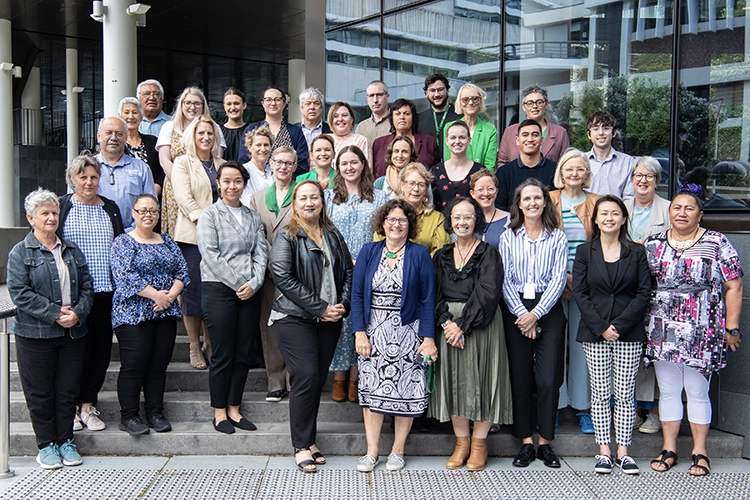
Te Tātai Hauora o Hine, National Centre for Women’s Health Research Aotearoa, and Mahitahi Hauora Primary Health Entity undertook a trial implementing HPV self-testing in Te Tai Tokerau (Northland). The trial aimed to test whether cervical screening coverage utilising the universal offer of HPV self-test program approach was non-inferior to cervical screening coverage in the then cytology cervical screening program.
Data collection for this study is complete and to date there have been three publications:
Lawton B, Gibson M, Slater T, Parag V, Stevenson K, Adcock A, et al. Primary cervical screening using a universal offer of human papillomavirus self-testing versus usual care in Aotearoa New Zealand: a cluster-randomised, non-inferiority trial. The Lancet Obstetrics, Gynaecology, & Women’s Health. 2026
Gibson-Helm M, Slater T, MacDonald EJ, Stevenson K, Adcock A, Geller S, et al. Te Ara Waiora-Implementing human papillomavirus (HPV) primary testing to prevent cervical cancer in Aotearoa New Zealand: A protocol for a non-inferiority trial. PLoS One. 2023;18(3):e0280643.
Slater T, Stevenson K, Adcock A, Clueard MA, Aperahama K, Thompson C, et al. Opportunities to flip the narrative from burden to action for young women joining the National Cervical Screening Programme in Aotearoa New Zealand: a Kaupapa Māori qualitative exploration of experiences and knowledge of cervical screening for 18-30 year olds. J Prim Health Care. 2025
Further publications are anticipated in 2026. The study played a critical part in informing the transition of New Zealand’s NCSP from cytology-based screening to HPV-based screening, including the option of self-test.
He Tapu Te Whare Tangata: Empowering Rural Solutions Study
The He tapu Whare Tangata study explored a new clinical pathway for colposcopy using HPV self-taken vaginal swabs, point-of-care testing, and direct referral to secondary services. The research centre Te Tātai Hauora O Hine partnered with the Iwi (tribal) group Ngāti Pāhauwera Development Trust, and Māori health provider Ngāti Porou Oranga for this important project. The ACPCC has provided training and technical support throughout the process.
This study aimed to address inequities in the clinical care pathway to colposcopy for wāhine Māori in rural Aotearoa, by combining HPV self-testing with point-of-care technology in a community-controlled cervical cancer prevention pathway.
Data collection for this study is complete and to date there have been two publications:
Sparkes NK, Adcock A, Slater T, MacDonald EJ, Storey F, Stanton JA, et al. ‘Point-of-Care-Testing is definitely the way to go‘: primary healthcare professionals in rural Aotearoa New Zealand talk about point-of-care testing for cervical cancer prevention. J Prim Health Care. 2026
Lawton B, MacDonald EJ, Storey F, Stanton JA, Adcock A, Gibson M, et al. A Model for Empowering Rural Solutions for Cervical Cancer Prevention (He Tapu Te Whare Tangata): Protocol for a Cluster Randomized Crossover Trial. JMIR Res Protoc. 2023;12:e51643
The overall program of Te Tātai Hauora o Hine work in cervical screening has been published as a chapter in the first comprehensive publication bringing together current global data about Indigenous and Tribal peoples’ experience with cancer: ‘Indigenous and Tribal Peoples and Cancer’ (open access).
India
The SHE-CAN study
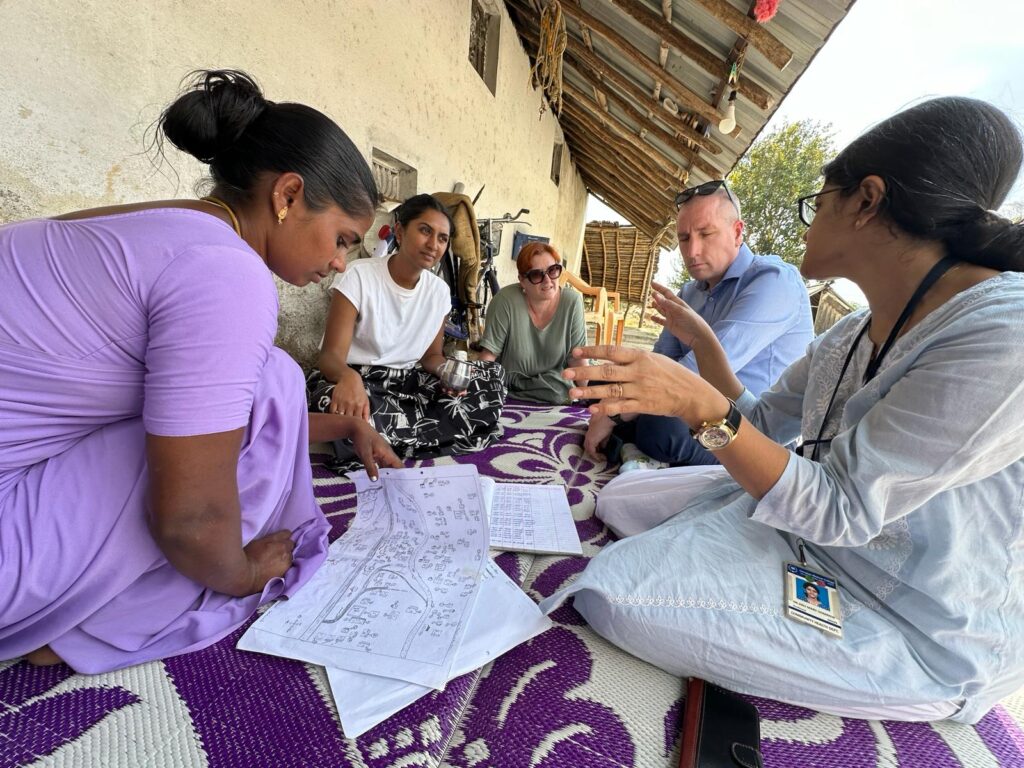
Project partners in India include not-for-profit health care organisations (Christian Medical College Vellore, and Tribal Heath Initiative, Sittilingi), in collaboration with the Directorate of Public Health and Preventive Medicine for the state of Tamil Nadu, and the Population Based Cancer Registry in Mizoram. Our partners include researchers from the University of Melbourne, Baker Heart and Diabetes Institute, and the International Agency for Research on Cancer.
Participant enrolment and sample collection for the Self-collected HPV Evaluation for the Prevention of Cervical Cancer (SHE-CAN) project commenced on March 21, 2025. The SHE-CAN trial protocol manuscript was published (Oommen et al), and ACPCC staff continue to be active as investigators in this research.
The SHE-CAN trial is supported by canSCREEN® with staff trained to collect data in the study sites, in the Indian provinces of Tamil Nadu and Mizoram. canSCREEN® was translated into Tamil for this study and configured to take into account the scarce address and often missing personal details of patients available in some of these remote locations.
Other locations
What else we’re doing
In the Cook Islands, VCS Pathology provides HPV testing and reflex cytology to support the cervical screening program. We also provide ongoing histology support to both PNG and Vanuatu.
We have donated a T2000 LBC processor to the Fiji laboratory to support the cytology testing in their cervical screening program. We are also in the process of donating a T5000 to Fiji for the same purposes.
ACPCC has recently undertaken studies with Italian company Copan to assess the stability of a new liquid media.
Get in touch
To find out more about what we do or how we can work together, please get in touch.