EPICC
The Elimination Partnership in Cervical Cancer (EPICC), funded by the Australian Government and the Minderoo Foundation, supports cervical cancer elimination across the Indo-Pacific. Partnering with local and international organisations, EPICC promotes HPV vaccination, screening, and treatment.
About EPICC
EPICC is an Australian Government supported program, funded through the Partnerships for a Healthy Region initiative, with complementary investment from the Minderoo Foundation. EPICC builds on Australia’s world leading expertise in cervical cancer prevention and control, working alongside regional partners to support sustainable, country-owned elimination efforts.
EPICC is delivered by a consortium led by the University of Sydney, together with the ACPCC, the Kirby Institute, Family Planning Australia, and global partners including Unitaid, the International Gynecologic Cancer Society (IGCS) and the Union for International Cancer Control (UICC).
The program operates across multiple Indo‑Pacific countries, supporting national strategies that align with the WHO’s three pillars of elimination: vaccination, screening and treatment.

This infographic outlines EPICC’s four-tiered approach to cervical cancer elimination in the Indo-Pacific.

The EPICC program logic assistance aims to enhance cervical cancer care in partner countries through improved systems.
What EPICC does
EPICC supports in-country partners to achieve the WHO ‘90-70-90′ cervical cancer elimination targets through six interconnected Priority Areas of Work:
- HPV vaccination strengthening
- HPV‑based screening and early treatment
- Laboratory and diagnostic capacity strengthening
- Digital health systems and registries (canSCREEN®)
- Treatment and palliative care capacity building
- Policy, planning and systems strengthening
EPICC Countries
Work is being undertaken in the following countries as a part of the EPICC initiative: Fiji, Malaysia, Nauru, Papua New Guinea, Solomon Islands, Timor Leste, Tuvalu and Vanuatu.
EPICC sets out a four-tiered country approach to identifying and meeting policy objectives essential to the development of sustainable cervical cancer control programs. Partner countries are tiered according to readiness, gaps and priorities in relation to end-of-program outcomes.




Spotlight on EPICC and Program ROSE
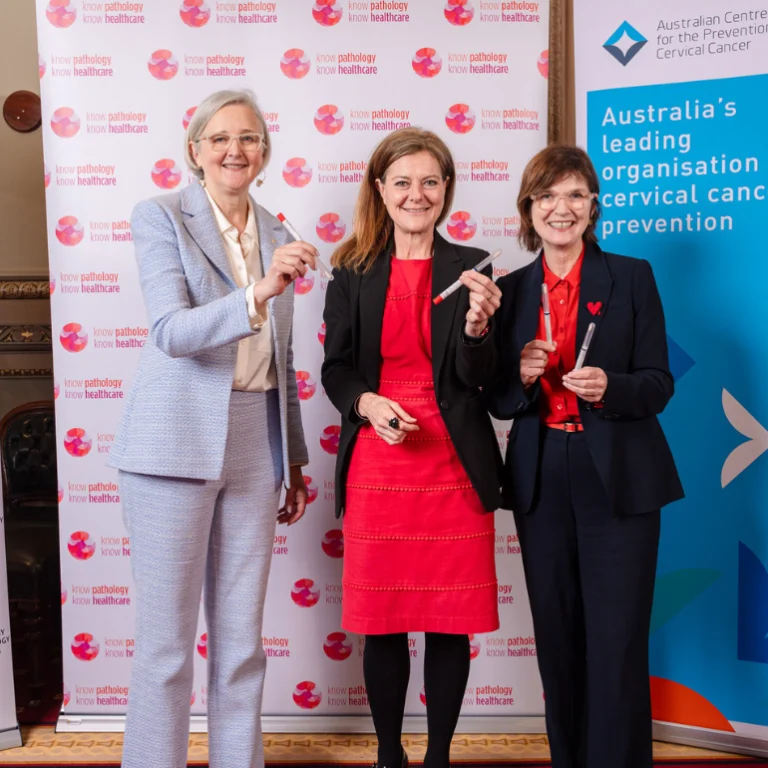
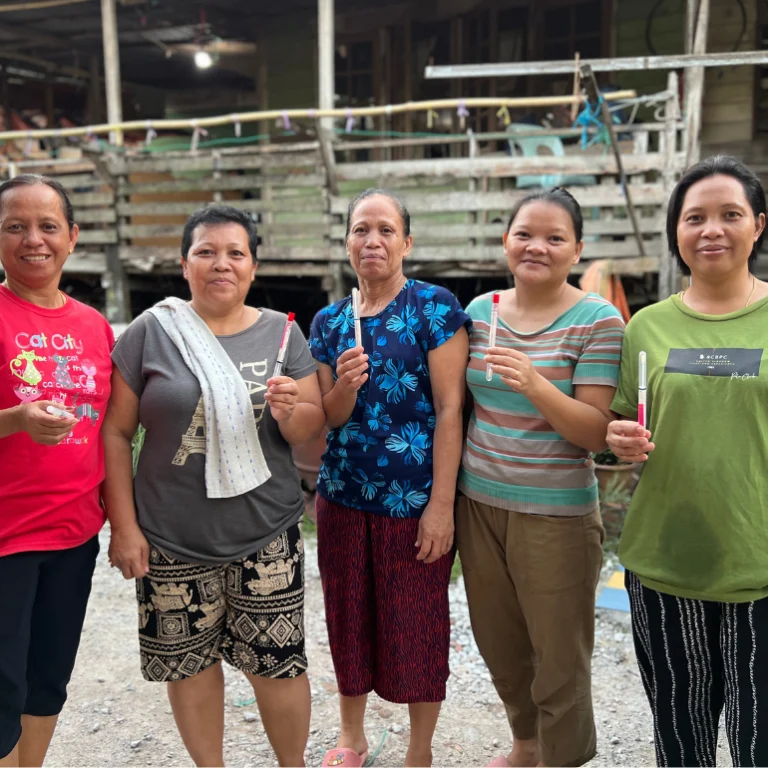
Through the EPICC program, ACPCC is supporting Program ROSE (Removing Obstacles to Cervical ScrEening) in Malaysia. Developed by the ACPCC and the University of Malaya, Program ROSE is a pioneering and revolutionary HPV PCR self-sampling cervical screening methodology with five pillars inclusive of education and advocacy to provide an integrated screening service with linkage to care.
Program ROSE has established a formal partnership with the Malaysian Ministry of Health, with a Memorandum of Understanding signed in March 2025 to support alignment with national cervical cancer elimination goals. Read more about EPICC & Program ROSE


Fiji
ACPCC reported close to 1,500 cervical screening cases for the Ministry of Health in Fiji to enhance efficiency and provide insights into HPV prevalence. The results of these cases will inform considerations about changes to the cervical screening pathway in Fiji.
Members of the EPICC consortium have been supporting the Fijian government in its planning to deliver HPV based cervical screening.
Malaysia
The ROSE Foundation is a non-profit organization committed to eliminating cervical cancer through Program ROSE (Removing Obstacles to cervical ScrEening). This pioneering initiative in Malaysia delivers an integrated and inclusive screening service to underprivileged and under-screened communities, guided by five core pillars that span awareness, knowledge and advocacy, self-sampling, digital health platform, ROSE laboratory and linkage to care.
Program ROSE works with the Ministry of Health Malaysia to support national cervical cancer elimination efforts. To date, Program ROSE has screened over 39,000 women nationwide, with 88% of HPV-positive women successfully linked to hospitals or clinics for follow-up care.

Nauru
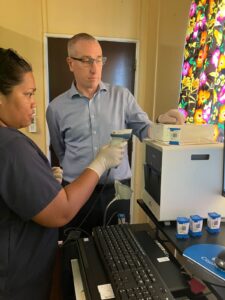
Several laboratory and clinical staff from the Nauruan Hospital and Public Health Department recently earned their Certificate of Competency in HPV Testing on the GeneXpert, a qualification obtained through the EPICC program and awarded by ACPCC. The “in-situ” training was provided to the Republic of Nauru (RON) hospital lab staff – who all successfully gained accreditation – by the Director of the Australian HPV Reference Laboratory, A/Prof Dave Hawkes. The reference lab is operated by the ACPCC, one of the partners implementing the EPICC program across eight countries throughout the Indo-Pacific.
One of the objectives of the EPICC program in Nauru is to equip local health and laboratory workers with the skills to process self-collected samples for HPV using the Xpert HPV test and GeneXpert IV system, both at the laboratory and point-of-care sites.
Further support for Nauru’s cervical cancer elimination goals includes reintroducing the HPV vaccination program with key EPICC partners such as NCIRS, and ongoing collaboration with Roche for training and technical support on non-molecular instruments.
Papua New Guinea
The ECCWP project established the digital registry platform required to guide implementation through the integration of the locally adapted canSCREEN® registries in PNG in May 2022. In the PNG project, canSCREEN® integrates directly with GeneXpert instruments in the field to get same-day results. Both the registry and connectivity solution are now successfully in use in the Mt Hagen Well Woman Clinic. This was the first instance of canSCREEN® supporting the “screen and treat” model for HPV screening and the first roll-out of the offline mobile app for the collection of data into canSCREEN®.
EPICC will build on the successes of the Eliminating Cervical Cancer in the Western Pacific (ECCWP) project, funded by the Minderoo Foundation, which has supported the introduction of sustainable elimination policy and practice in Vanuatu and the Western Highlands region of Papua New Guinea. A number of other provinces in PNG are also moving forward with their plans in establishing an HPV-based cervical cancer screening program with 22,334 women screened in PNG to date.

Solomon Islands
The Australian HPV Reference Laboratory at ACPCC hosted the Solomon Islands Permanent Health Secretary, Mrs. Pauline McNeil, the Minister of Health Hon Dr Paul Bosawai, and the minister of Agriculture Hon Franklyn Derek Wasi in 2024, to establish the important relationships that will underpin ACPCC’s laboratory strengthening program via EPICC. The screen, treat and training aspects of EPICC are being led by Family Planning Australia, with the first testing expected to commence in 2025. Work towards these goals has already begun.

Timor-Leste
Building on the previous work of the C4 Centre of Research Excellence in Cervical Cancer Control in the region, Timor-Leste is one of the countries that is being supported by DFAT under the EPICC program.
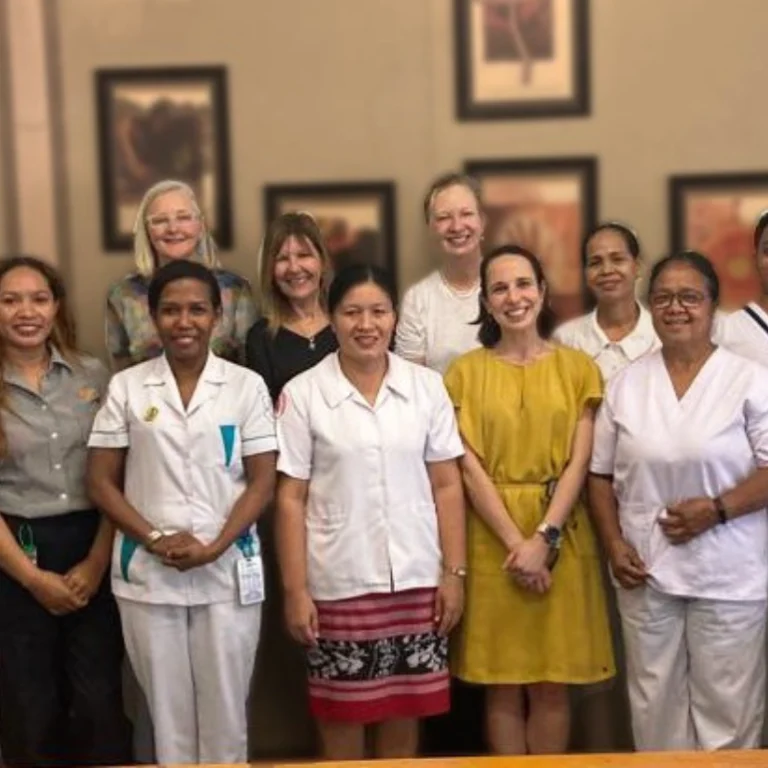
To better understand the needs and opportunities for cervical cancer elimination in the country, and to strengthen inter-country relationships, members of the C4 consortium conducted a scoping visit in August 2023. During the visit, we were able to meet and discuss cervical cancer control in Timor-Leste across the 3 pillars with many relevant national stakeholders including: the Ministry of Health, WHO Timor-Leste, the NITAG, the National Hospital Guido Valadares, the National Institute of Public Health, the National Health Laboratory, and the Australian Embassy (DFAT, in Timor-Leste). Members of the C4 group, the Minderoo Foundation and guests from Timor-Leste then came to Sydney in October 2023 to begin the co-design planning process.
Tuvalu
The tiny and remote island nation of Tuvalu is the first in the Pacific to hit the World Health Organization (WHO) global screening goal for cervical cancer elimination, with 76% of eligible women screened.
In 2021, Family Planning Australia, the Tuvalu Family Health Association, and the Tuvalu Ministry of Health kicked off a national cervical screening and treatment program, thanks to funding from the Australian Government through the Australian NGO Cooperation Program. This cervical screening project gets support from Cepheid and other technical partners like the WHO and the Australian Centre for the Prevention of Cervical Cancer (ACPCC).
Vanuatu
In October 2023 the Vanuatu Government declared that it would be the first nation in the Pacific to commit to a national strategy for the elimination of cervical cancer. ACPCC has been thrilled to be part of the ECCWP program (led by the Kirby Institute alongside other partners) – alongside other partners in Vanuatu and Australia – to support this marvellous initiative as women in Vanuatu are seven times more likely to die from cervical cancer than those in Australia. Vaccine delivery has now commenced in all provinces, at schools and communities too.
Vanuatu is now one of the EPICC countries.