Six

Deliver and disseminate the research outcomes of the Compass Trial, C4 and other policy relevant research

C4 NHMRC Centre for Research Excellence in Cervical Cancer Control overview

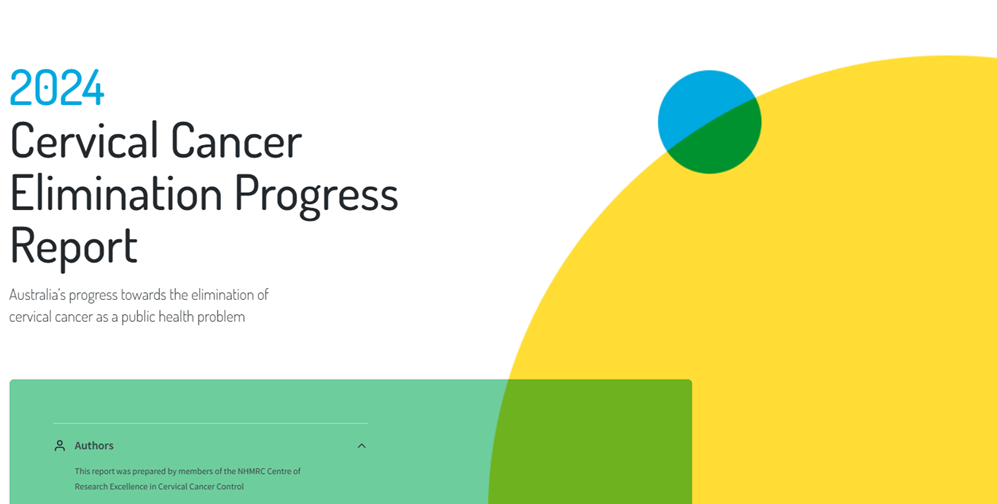
C4 NHMRC Centre for Research Excellence in Cervical Cancer Control brings together Australia’s leaders in cervical cancer control in both HPV vaccination and cervical screening, with researchers from The University of Sydney, the ACPCCAustralian Centre for the Prevention of Cervical Cancer, Kirby Institute at UNSW University of New South WalesSydney, Australian National University and the University of Melbourne. The prior work of C4 NHMRC Centre for Research Excellence in Cervical Cancer Controlinvestigators has underpinned Australia’s major innovations in public health in terms of the successful delivery of HPV Human Papillomavirusvaccination and the implementation of an HPVHuman Papillomavirus-based NCSPNational Cervical Screening Program. The WHO World Health Organization has called for global action towards the elimination of cervical cancer. C4 NHMRC Centre for Research Excellence in Cervical Cancer Controlbrings together the leaders in HPV Human Papillomavirusvaccination and cervical screening whose work has been instrumental in positioning Australia at the forefront of cervical cancer control. In March 2025, C4 NHMRC Centre for Research Excellence in Cervical Cancer Controlreleased their annual report highlighting Australia’s progress toward achieving cervical cancer elimination.

Compass trial update

The Compass trial, a partnership between the ACPCC Australian Centre for the Prevention of Cervical Cancer and The University of Sydney, is a randomised controlled trial which aims to compare two and a half year year cytology screening (Pap smear) with the five-yearly HPV Human Papillomavirusscreening. The Compass trial also aims to improve and refine the NCSP National Cervical Screening Programand to ensure healthy women don’t undergo unnecessary procedures. Over 76,000 Australian women participated in this trial, the last of whom will be exiting the trial by the end of 2026. In 2025 a sub-study of the trial, Compass-PLUS, examined the impact of primary HPV Human Papillomavirusscreening on anxiety and screening behaviours during the COVID-19 pandemic. The study found the following:

The findings provided valuable insights into screening behaviours during the pandemic. Lower on-time screening attendance was associated with de-prioritisation of cervical screening. It is important that women who miss their screens are identified and targeted efforts are made by GP practices so catch-up screens can be performed. This should include offering the option of self-collection which was made universally available by the Australian Government on 1st July 2022.  The findings also highlight the need to plan for future emergencies, to enable the continuity of essential public health services including cancer screening. These plans should ensure equitable access to cancer screening and public communications on the importance of continuing screening to maintain early detection and treatment of cancer.

Reference: Preventative Medicine Reports Vol 45, Sept 2024.

ECC2024Eliminating Cervical Cancer 2024 Conference: A landmark gathering for cervical cancer elimination

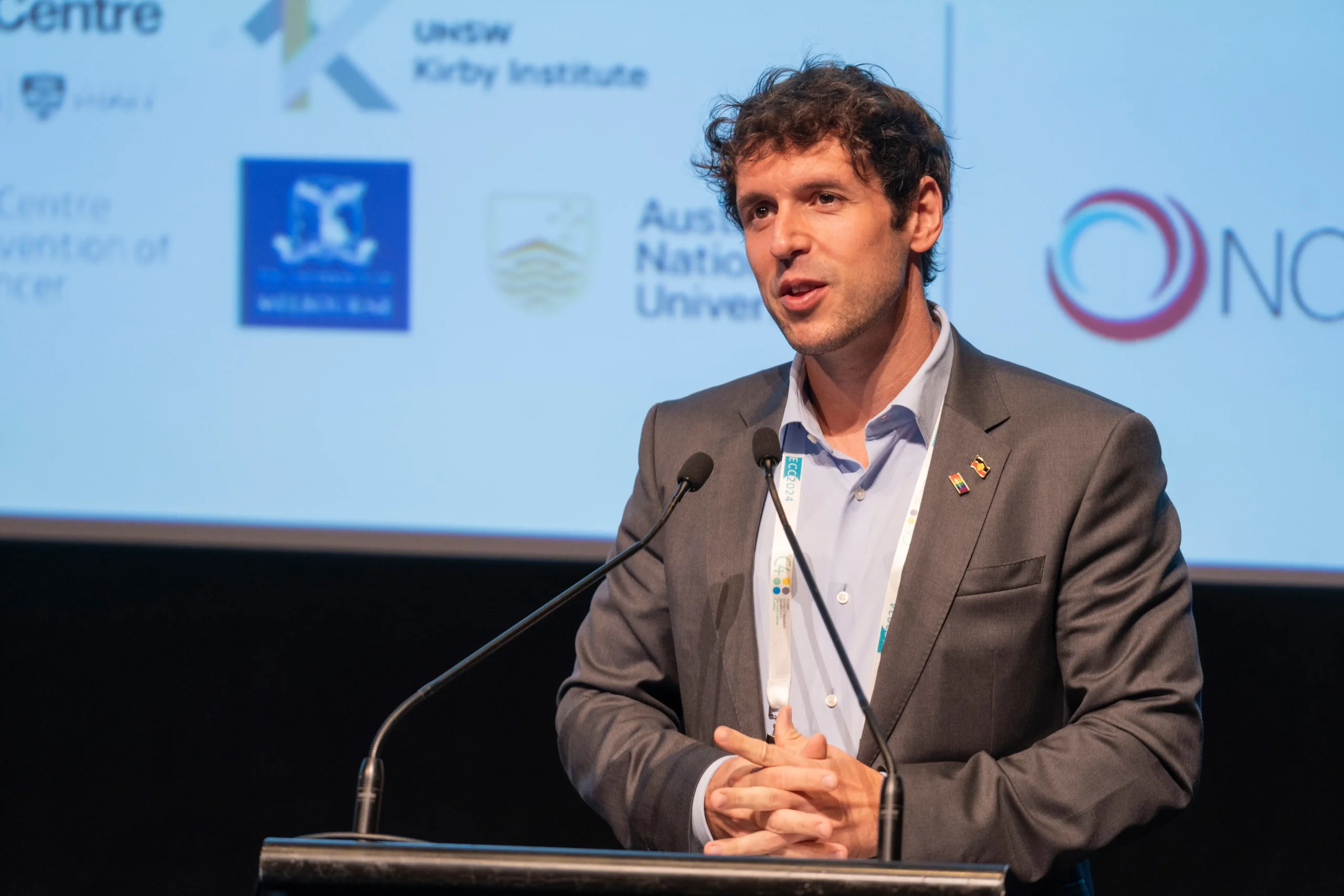
The eighth Eliminating Cervical Cancer Conference was hosted by C4 NHMRC Centre for Research Excellence in Cervical Cancer Control from 27–29 November 2024 at the Sofitel Melbourne, and brought together global leaders in cervical cancer prevention. This hybrid event allowed for many attendees from low to middle income countries to participate virtually. The theme of the conference was ‘Achieving equity in Australia and the Indo-Pacific region’. Co-chaired by Professor Marion Saville AM and Professor Karen Canfell AC, and opened by the Ambassador for Global Health, Dr Lucas de Toca and the Hon Pat Conroy MP, ECC2024 Eliminating Cervical Cancer 2024 Conferencewelcomed 236 in-person and 76 virtual attendees. The consensus from the domestic and international presenters was that the equitable elimination of cervical cancer is a collaborative effort, and we must not leave anyone behind. ECC2024 Eliminating Cervical Cancer 2024 Conferencedelivered a high-impact program at a cost comparable to previous years, despite a 50% increase in duration. Survey feedback was overwhelmingly positive: 99% of respondents rated the event as very good or excellent, with HPV testing and regional screening emerging as key content highlights. The conference strengthened our profile, provided valuable staff development, and fostered international collaboration. Attendees praised the professionalism, inclusivity, and seamless technical support, with 92% saying they would recommend the event to others. ECC2024 Eliminating Cervical Cancer 2024 Conferencereaffirmed the ACPCCAustralian Centre for the Prevention of Cervical Cancer’s leadership in the global movement to eliminate cervical cancer and set a new benchmark for future conferences.


Contributions to research & publications on self-collection

VCS Victorian Cytology Service Pathology staff authored a number of new self-collection articles which were published in the last financial year. To access these articles, see the following links: Microbiology Spectrum, Journal of Medical Virology, Cancer Medicine, JAMA Network Open, Journal of Virological Methods, Australian Journal of General Practice, BMC Medical,  BMJ Sex Reprod Health, BMJ Global Health, Lancet Public Health Prof Marion Saville AM also co-authored an article in The Conversation, which explains the changes to the NCSP National Cervical Screening Programand what a patient can expect at their next CST Cervical Screening Testappointment.
Feature article: Our scientific manuscript “Exponential uptake of HPV self-collected cervical screening testing 2 years since universal availability in Victoria, Australia” was led by the Population Health team with strong collaboration from Victorian Cancer Screening Framework partners and was published by the BMC Medicine Collection on HPV Human Papillomavirus. This work represents the first scientific literature globally to be published on the population uptake of HPV Human Papillomavirusself-collection following the introduction of universal availability in a country aiming to actively achieve cervical cancer elimination.

SHE-CANSelf-collected HPV Evaluation for the Prevention of Cervical Cancer

Participant enrolment and sample collection for the SHE-CAN Self-collected HPV Evaluation for the Prevention of Cervical Cancer project commenced on March 21, 2025. The SHE-CAN Self-collected HPV Evaluation for the Prevention of Cervical Cancer protocol manuscript was submitted (Oommen et al), and ACPCC Australian Centre for the Prevention of Cervical Cancerstaff continue to be active as investigators in this research. The SHE-CAN Self-collected HPV Evaluation for the Prevention of Cervical Cancer trial is supported by canSCREEN® with staff trained to collect data in the study sites, in the Indian provinces of Tamil Nadu and Mizoram, with more than 600 women screened to date. canSCREEN® was translated into Tamil for this study and configured to take into account the scarce address and often missing personal details of patients available in some of these remote locations.

The Population Health team co-authored the Hep C cascade of care manuscript published in Eurosurveillance in July 2024. Australia’s hepatitis C surveillance data from 2015–2022 shows improved diagnosis and treatment uptake following the introduction of direct-acting antivirals. However, significant gaps remain in reaching priority populations, including people who inject drugs and those in custodial settings. The findings highlighted the need for targeted strategies to achieve hepatitis C elimination goals, especially in underserved communities.